Reviews
Part of Gold Bullion Buying Guide: Working Out Fine Content
Gold coins, bars, wafers, and divisible products compared
Gold coins, bars, wafers, and divisible products compared by fine content, premium, recognition, packaging, storage, inspection, and resale flexibility.
What to take away
Gold coins, bars, wafers, and divisible products hold the same metal in different retail shapes. This comparison covers ordinary bullion, not rare coins, jewelry, or exchange-traded products. Buying, storing, testing, and selling change with each form.
- The American Gold Eagle is 22-karat (91.67% gold). The Canadian Maple Leaf, Austrian Philharmonic, and Australian Kangaroo are 99.99% fine. Compare fine ounces, not gross weight.
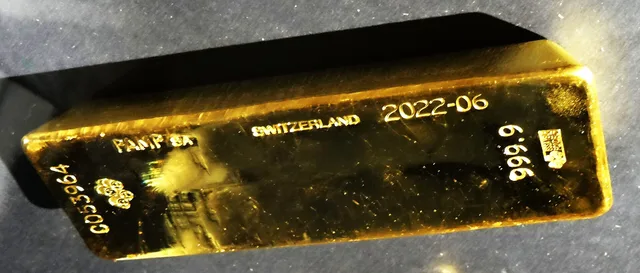
- A 1 oz cast bar from a refiner such as PAMP Suisse, Valcambi, or Asahi Refining sells as one unit, not by the coin.
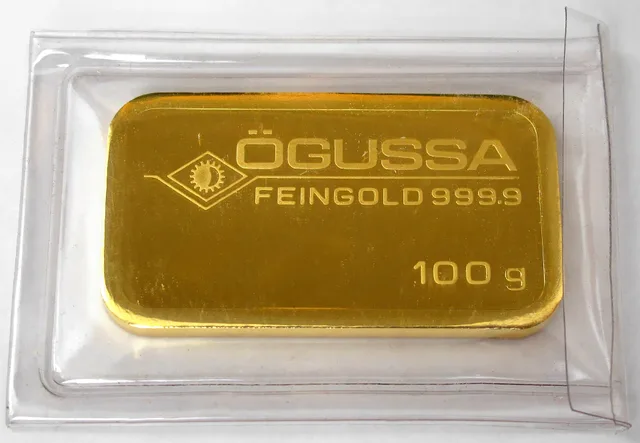
- Minted bars in sealed assay cards (PAMP Suisse, Perth Mint, Royal Canadian Mint) can lose bid value once the card is opened.
- Gram wafers from Valcambi, PAMP Suisse, and the Perth Mint let you sell small amounts at a higher cost per fine ounce.
- Valcambi CombiBar and Perth Mint Breakable bars split into segments. A separated segment may not draw a standard bullion bid.
Side-by-side view
| Product | Fine content | Premium pattern | Recognition | Packaging | Inspection focus | Resale | |---|---|---|---|---|---|---|---| | American Gold Eagle 1 oz | 91.67% gold, 1 oz fine | Higher; US legal tender | Very wide in the US | Tube or capsule | Weight 33.93 g, diameter 32.7 mm | Sold by coin | | Canadian Maple Leaf 1 oz | 99.99% | Moderate | Global | Sealed sheet or capsule | Radial lines, micro-engraved maple | Sold by coin | | Austrian Philharmonic 1 oz | 99.99% | Moderate; steady European demand | Strong in Europe | Tube or capsule | Weight 31.1 g, diameter 37 mm | Sold by coin | | PAMP Suisse 1 oz cast bar | 99.99% | Lower per ounce | Global refiner mark | None | "PAMP" logo, serial, assay | Sold as one unit | | Asahi Refining 1 kg cast bar | 99.99% | Lowest per ounce | Global refiner mark | None | 1000 g weight, serial, refiner stamp | Sold as one unit | | Perth Mint 1 oz minted bar | 99.99% | Moderate | Strong in Asia-Pacific | Sealed assay card | Bar-to-card serial match | Card condition affects bid | | Royal Canadian Mint 1 oz minted bar | 99.99% | Moderate | Strong in Canada | Sealed assay card | Bar-to-card serial match | Card condition affects bid | | Valcambi 1 g wafer | 99.99% | High per ounce | Wide | Sealed sheet of 20 or 50 | Tiny markings, exact gram weight | Sold singly or by sheet | | Valcambi CombiBar 50 g | 99.99% | High per ounce | Wide | Snap-apart card | Marks on each 1 g segment | Whole or split, per buyer |
Premiums move with dealer, quantity, and demand. As typical US retail ranges in 2026, expect about 4% to 8% over spot for a 1 oz American Gold Eagle.
Gold Product Comparison
American Gold Eagle
- Fine content
- 91.67% gold
- Premium
- Higher
- Recognition
- Very wide in US
- Packaging
- Tube or capsule
- Inspection focus
- Weight 33.93 g
- Resale
- Sold by coin
Canadian Maple Leaf
- Fine content
- 99.99%
- Premium
- Moderate
- Recognition
- Global
- Packaging
- Sealed sheet or capsule
- Inspection focus
- Radial lines, micro-engraved
- Resale
- Sold by coin
PAMP Suisse Bar
- Fine content
- 99.99%
- Premium
- Lower per ounce
- Recognition
- Global refiner mark
- Packaging
- None
- Inspection focus
- Logo, serial, assay
- Resale
- Sold as one unit
A 1 oz Canadian Maple Leaf typically runs 2% to 4%, and a 1 oz cast bar 1% to 3%. A 1 g Valcambi wafer typically runs 8% to 15%.
Dealers quote buyback below spot, so a round trip costs more than the premium alone. APMEX and JM Bullion both post buyback prices for the products they sell. For a 1 oz American Gold Eagle, the gap they quote typically falls in a range of about 1% to 3% below spot.
A 1 g wafer has commonly shown a wider gap.
Sovereign bullion coins
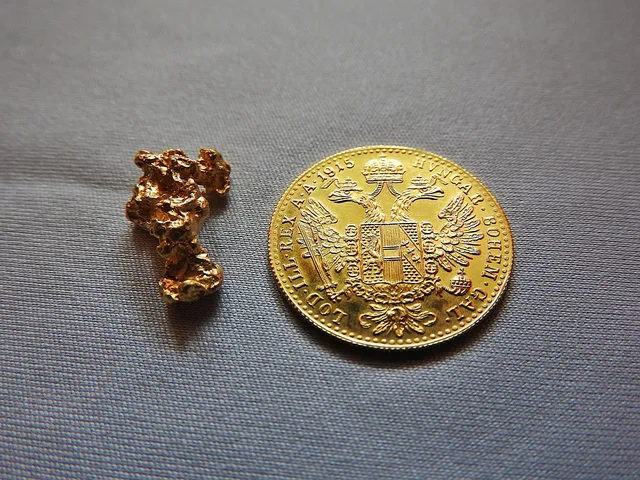
A sovereign bullion coin is issued under government authority and carries a nominal face value. Its market price tracks metal value and premium, not the stamped denomination. The US Mint, Royal Canadian Mint, Perth Mint, and Austrian Mint publish weight, composition, diameter, and design for each release.
The American Gold Eagle is alloyed with silver and copper to 22 karats, so a 1 oz fine coin weighs 33.93 grams. The Canadian Gold Maple Leaf, Austrian Philharmonic, and Australian Kangaroo are 99.99% fine. Compare fine content, not gross mass.
Recognition widens the pool of buyers. It does not remove counterfeit risk. Proof finishes, low-mintage years, and certified grades trade in a separate collectible market and should be priced apart from bullion.
Cast bars
Cast bars are poured into molds. Cooling and mold contact leave rounded edges, flow lines, and slight dimensional variation. Those features are normal, not defects. The refiner's specification and a qualified examination control the assessment.
PAMP Suisse, Valcambi, Asahi Refining, and the Perth Mint produce cast bars. Sizes include:
- 1 oz
- 100 g
- 250 g
- 1 kg
- larger sizes
The gold bar overview covers cast and minted forms and common serial and packaging practice. For a specific bar, use the named refiner's current spec sheet.
A 1 kg cast bar spreads fabrication cost over more metal, so premium per fine ounce is lower than a 1 oz coin. Each unit costs more, concentrates custody risk, and cannot be partly sold without cutting the bar.
Minted bars
Minted bars start as blanks cut from rolled sheet, then receive a controlled finish and struck markings. Most retail examples ship in a sealed assay card with a matching serial. Uniform surfaces make tampering easier to spot, but visual consistency alone does not prove authenticity.
PAMP Suisse Fortuna, Perth Mint, and Royal Canadian Mint minted bars are the common named products. Treat each as a complete commercial unit. Record whether the quote assumes a sealed card, whether a replacement card exists, and whether local buyers cut their bid after opening.
US federal law levies no VAT on gold and no national sales tax. Sales tax is set by each state. Many states exempt investment-grade coins and bars, some grant the exemption only above a minimum purchase, and a few tax small purchases in full. Confirm the rule in your state and record it with the quote.
In Canada, GST/HST is zero-rated for gold of at least 99.5% purity. For a sale into the UK, the Value Added Tax Act 1994 exemption group covers gold of at least 995 thousandths in bar or wafer form of a weight accepted by the bullion markets.
Gram wafers
One-, two-, five-, and ten-gram wafers lower the cash needed for one unit and let you sell a small amount without parting with a full ounce. Valcambi, PAMP Suisse, and the Perth Mint are the common makers. Premium per fine ounce runs higher, and the markings are small enough that inspection takes care.
A sheet of sealed grams is both metal and a packaging system. Confirm that each unit carries its own weight, fineness, maker, and serial. Ask how a buyer treats a separated unit before you break the sheet.
Divisible products
Valcambi CombiBar and Perth Mint Breakable bars are scored or snap-apart. Do not assume a segment draws a standard bullion bid once separated. It may lose the original serial relationship or create a testing burden larger than its value.
Before buying, get written answers to three questions:
- What specification appears on each separated piece?
- Which dealers currently buy individual segments, and how do they price them?
- Does separation change the warranty, assay evidence, packaging status, or tax treatment?
Cast and minted bars compared with sovereign coins and rounds sets out how each form is made and what that means for the bid you receive.
Compare the same amount of fine gold
Pick one fine-gold target, such as one troy ounce. Add fractional units or grams to reach it. Then record delivered cost, piece count, storage volume, and insurance treatment. Also record immediate net buyback.
Equal Fine Gold Exposure
Ten 1/10 oz Eagles
- Fine gold
- 1 oz total
- Premium
- Higher combined
- Partial sales
- Possible
- Buyback
- Varies by dealer
One 1 oz Maple Leaf
- Fine gold
- 1 oz
- Premium
- Moderate
- Partial sales
- Not possible
- Buyback
- Varies by dealer
One 1 oz PAMP Bar
- Fine gold
- 1 oz
- Premium
- Lower per ounce
- Partial sales
- Not possible
- Buyback
- May quote differently
Storage volume is easy to measure and seldom the constraint. Gold has a density of 19.32 g/cm3, so one troy ounce of fine gold occupies about 1.61 cubic centimeters of metal. Packaging adds air. A US Mint 20-coin tube holds 20 oz of fine gold in a cylinder roughly 40 mm across and 60 mm tall.
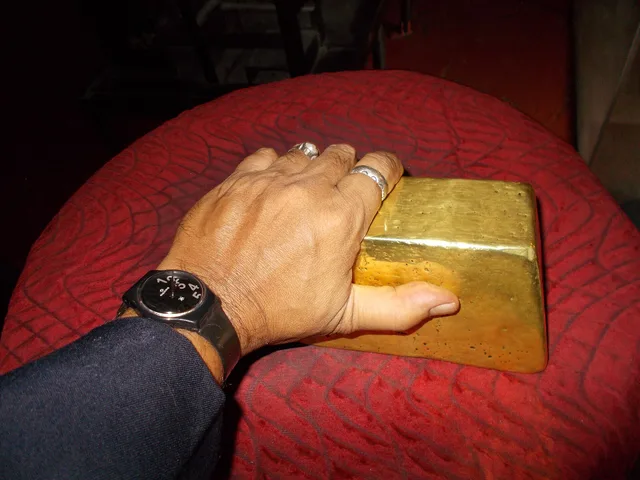
The gold in a 1 kg bar would fill a slab about 80 mm by 40 mm by 16 mm at that density.
Insurance is a yearly cost. A collectibles or valuables policy typically charges about $0.40 to $0.80 per $100 of insured value per year, so $10,000 of gold costs roughly $40 to $80 a year.
A homeowner policy rider may cap the metals coverage below what you hold. A bank safe deposit box usually costs less than a policy, but the bank insures the box, not the contents. Record the insured value and the deductible next to the delivered cost.
Worked example
Ten 1/10 oz American Gold Eagles hold the same fine gold as one 1 oz Maple Leaf. Their combined premium runs higher, but they allow smaller sales. A 1 oz PAMP Suisse cast bar may cost less than either, yet local buyers may quote it differently. The answer belongs to the actual quotes, not a universal ranking.
Pre-purchase checklist
- Set a maximum value for any single unit, and write it down before you buy.
- Decide whether partial sales are likely.
- Confirm you can read the smallest markings with a loupe and a scale.
- Confirm whether the packaging must stay sealed to keep the full bid.
- Get buyback quotes from at least two dealers for the exact product.
- Compare the quoted premium with the quoted buyback spread.
- Record where the pieces are stored, how they are insured, and how they are inventoried.
Common questions
Is a government coin automatically worth more than a private bar?
No. Product, condition, demand, fine content, and current bids set the trade. Legal-tender status alone does not fix a premium. A 1 oz American Gold Eagle and a 1 oz PAMP Suisse cast bar can trade within a few dollars of each other on metal value.
Is an irregular cast surface proof of damage?
No. Casting produces natural variation in edges, flow lines, and surface. Compare the bar with its refiner's specification and get qualified examination when evidence conflicts. A caliper and scale check is the first step.
Are gram wafers easier to sell?
They are smaller, but ease of sale depends on recognition, verification, condition, and the buyers near you. Valcambi and PAMP Suisse wafers are widely known, which helps. Expect a wider spread per ounce than a 1 oz coin.
Can a divisible bar always be sold in pieces?
Physically separable does not mean commercially interchangeable. Confirm bids and verification requirements for separated segments before purchase. Some dealers price a split Valcambi CombiBar segment as scrap rather than as a branded product.