Guides
Gold Bullion Buying Guide: Working Out Fine Content
Gold bullion buying starts with fine content: troy ounces versus grams, karat and fineness, and why a coin and a bar can hold the same amount of gold.
What to take away
- Compare gold by fine-gold weight, not by gross weight, size, or face value.
- A troy ounce is about 31.1035 grams, not the 28.3495-gram avoirdupois ounce.
- Fine-gold weight equals gross weight times fineness.
- A 33.931-gram 22-karat coin can hold one full troy ounce of fine gold, and a 31.1035-gram 999.9 bar just under that.
- A refiner or mint mark plus stated fineness says more than any account of where the metal was dug.
Start with the unit, not the product
A troy ounce equals about 31.1035 grams, while the avoirdupois ounce used for many household goods is 28.3495 grams. Dealers may quote gold per troy ounce while selling products in grams, so any comparison needs one common unit before it means anything.
Troy vs Avoirdupois Ounce
Troy ounce
- Grams
- 31.1035
- Used for
- Gold bullion
- Dealer quotes
- Per troy ounce
Avoirdupois ounce
- Grams
- 28.3495
- Used for
- Household goods
- Dealer quotes
- Not for gold
The slip is easy to make because both units are called an ounce. When a product page lists grams and a quote lists ounces, convert once, write down the unit you used, and keep it the same for every offer you compare.
Gross weight times fineness equals fine gold
Fine-gold content sets the metal value, and one formula gives it: multiply gross weight by fineness. The specification, not color or size, controls the result.
gross weight x fineness = fine-gold weight
Fine-Gold Weight Examples
- 33.931 ggross weight of 91.67% gold coin
- 31.1035 gfine gold in that coin
- 31.1035 ggross weight of 999.9 bar
- 31.1035 gfine gold in that bar
A 33.931-gram coin made of 91.67 percent gold can still contain one full troy ounce of fine gold because the remaining mass is alloy. A 31.1035-gram bar marked 999.9 contains just under 31.1035 grams of fine gold. Both hold roughly one troy ounce, in different gross weights.
The heavier coin is not a bigger purchase of gold, because its extra mass is alloy. Compare the fine-gold quantity first, then ask what each form costs and how it resells, which the coin, bar and wafer comparison takes up.
Reading karat, fineness, and face value
Gross weight, fine-gold weight, fineness, and face value describe different facts, and one product page may show several at once. Karat is a fineness mark too: a 22-karat coin is 91.67 percent gold, and the American Gold Buffalo is 24-karat and 999.9 fine.
| Term | What it tells you | Example |
|---|---|---|
| Gross weight | Mass of the whole item, alloy included | 33.931 grams for a one-ounce American Gold Eagle |
| Fineness | Share of the item that is gold | 91.67% for the Eagle, 999.9 for a bar marked that way |
| Fine-gold weight | Gold actually held: gross weight x fineness | One troy ounce for the Eagle |
| Face value | Nominal denomination stamped on a coin | Usually far below metal value |
Face value is nominal, so it never tells you the gold content, and you can ignore it when you work out fine gold. Bullion coins normally trade around metal value plus or minus a market premium, not at the stamped denomination.
Fineness varies by issue. The Eagle and Krugerrand are 91.67% gold. The Buffalo, Maple Leaf, Britannia, and Philharmonic are commonly issued in 999.9 fine gold, although specifications can vary by issue and year. Check the exact product, and see the list of marking errors and fixes for the slips that catch buyers out.
Karat claims are regulated on the jewelry side. The FTC's Jewelry Guides, in 16 CFR 23.3, call it unfair or deceptive to misrepresent the quantity or karat fineness of gold in an industry product. Bullion buyers can borrow the habit: get the stated fineness in the listing or on the invoice, and compare it with the issuer's specification.
What a government mint guarantees
The U.S. Mint lists American Gold Eagle bullion coins in four sizes: one troy ounce, one-half, one-quarter, and one-tenth troy ounce. The one-ounce Eagle is 22-karat (91.67% gold), weighs 33.931 grams gross, and contains one troy ounce of fine gold.
American Gold Buffalo bullion coins are 24-karat and 999.9 fine. The Mint states composition and the government's weight, content, and purity guarantee on its bullion coin program specifications. That guarantee applies to genuine coins. It does not guarantee a private dealer, price, delivery promise, or storage program.
So the guarantee covers the metal in a genuine coin, not the person selling it. Seller identity, terms, and delivery still need their own checks, and the bullion formats guide shows how weight, fineness, and markings are stated for each format.
Who refined it, and why that matters
Most retail gold passes through a refinery, not straight from a mine. The USGS gold commodity summary reports about 16 domestic refineries produced commercial-grade gold in 2025. New and old scrap recycling equaled roughly 60 percent of reported domestic consumption.
A refiner or mint mark plus stated fineness identifies a product better than any account of where the metal was dug. The London Bullion Market Association's (LBMA) Good Delivery Rules are a wholesale-market standard for gold bars acceptable in the London market. They are not a blanket authentication guarantee for retail coins or bars.
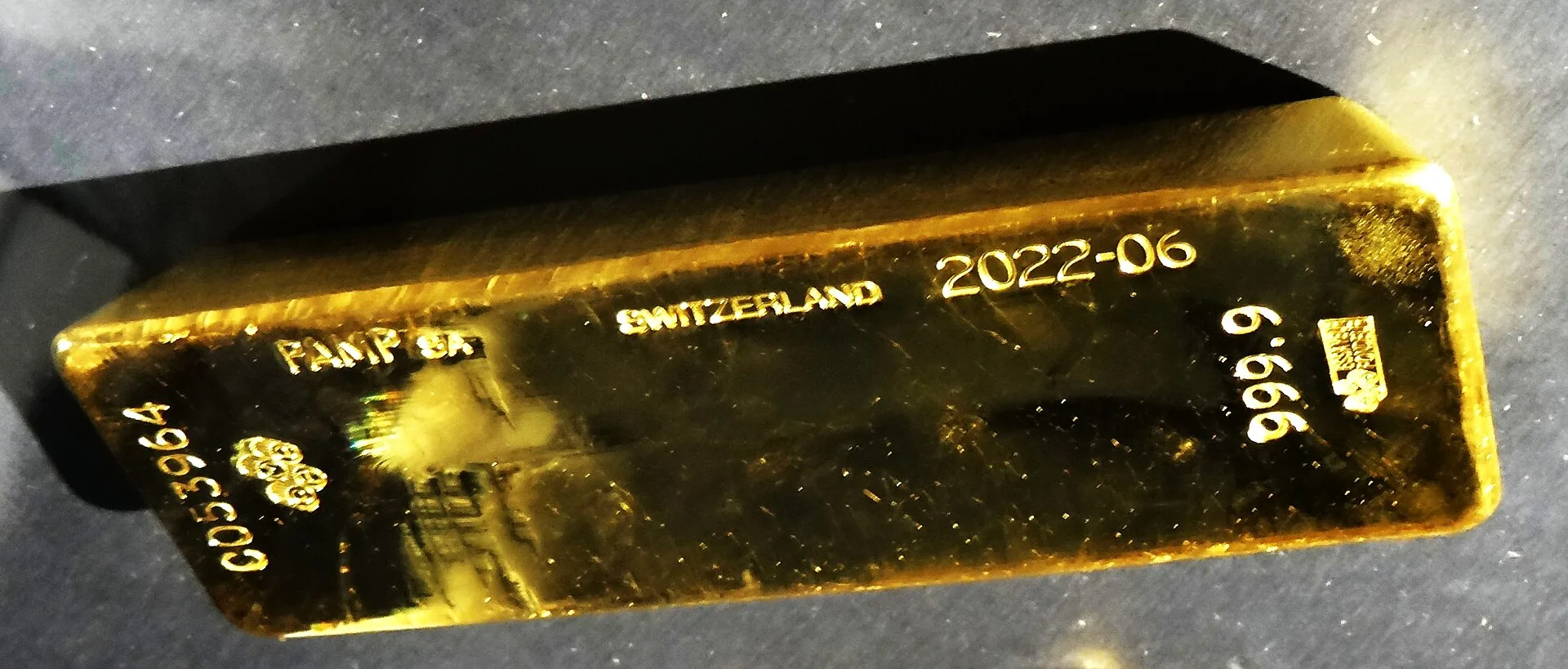
Minted bars from PAMP Suisse, Valcambi, Asahi Refining, and Rand Refinery are examples of refiner-marked products. A card can preserve identification and marketability, but it is evidence, not proof by itself. Match the mark, the stated fineness, and the serial against the listing and the issuer's specification before you pay.
Check fine content before you pay
Use the same short routine on every offer, so that fine-gold quantity is the thing you compare. Write the result next to each quote, with its unit.
- Find the gross weight and its unit in the product specification.
- Find the stated fineness or karat, and confirm it against the issuer's specification.
- Multiply gross weight by fineness to get fine-gold weight.
- Convert grams to troy ounces so every offer uses one unit.
- Only then compare prices, using the method for comparing gold bullion quotes.
A quote that states only a gross weight, or only a product name, leaves the fine-gold figure open. Ask the seller for the missing number in writing, and do not rely on any comparison until every offer has both a weight and a fineness behind it.
If the numbers conflict when the order arrives, such as a gross weight that misses the listing, set the item aside. Conflicting results call for qualified examination, not destructive improvisation, and the coin and bar inspection checklist covers the delivery checks.
Common questions
Is 24-karat gold always better than 22-karat gold?
No. Fineness and fine-gold content are separate. A 22-karat coin can contain the same fine-gold amount as a 24-karat coin while weighing more because of alloy.
Does a heavier product always hold more gold?
No. Gross weight includes alloy. A 33.931-gram 91.67% coin can contain one full troy ounce of fine gold, while a 31.1035-gram bar marked 999.9 contains just under 31.1035 grams of fine gold.
Is sealed assay packaging enough to authenticate a bar?
No. Treat the card, serial, seller records, measurements, and appropriate testing as parts of one evidence set.
Which ounce do dealers use for gold?
Dealers may quote gold per troy ounce while selling products in grams. A troy ounce is about 31.1035 grams, so convert once and keep one unit.
In this guide
- How to Compare Gold Bullion Quote Details Line by LineLearn how to compare gold bullion quote details by matching fine-gold content, spot timing, purchase costs, delivered price, premiums, and resale value.
- Gold coins, bars, wafers, and divisible products comparedGold coins, bars, wafers, and divisible products compared by fine content, premium, recognition, packaging, storage, inspection, and resale flexibility.
- Gold coin and bar inspection checklist on deliveryGold coin and bar inspection checklist for listings, packages, markings, weight, dimensions, security features, records, testing limits, and escalation.
- Gold Bullion Problems: Weight and Packaging ChecksGold bullion problems can start with ounce conversions, damaged assay cards, and serial mismatches. Learn what to check before buying or disputing a bar.
- A gold bar purchase and its exit cost: a worked caseGold bar purchase case comparing a 20-gram bar with a one-ounce coin through delivered premium, custody, documentation, buyback spread, and sale records.