Rules
Part of Gold Bullion Buying Guide: Working Out Fine Content
Gold Bullion Problems: Weight and Packaging Checks
Gold bullion problems can start with ounce conversions, damaged assay cards, and serial mismatches. Learn what to check before buying or disputing a bar.
What to take away
- Gold trades in troy ounces, 31.1034768 grams each; a household ounce is 28.3495 grams, and mixing the two misstates every premium.
- Gross weight, fineness, and fine-gold content are three separate numbers. Record them in three separate columns.
- The advertised price is not the delivered price until the quantity, payment method, and destination are fixed in writing.
- A refiner on the LBMA Good Delivery list makes retail bars that are not themselves London Good Delivery bars.
- Photograph the parcel before opening it, and read the return terms before you break an assay card seal.
Gold bullion problems do not require a counterfeiter. A unit conversion, a vague listing, a switched product, or a cracked card is enough to cost real money. The controlled fixes below start with evidence, not accusation.
The wrong ounce
Gold is quoted in troy ounces. One troy ounce is 31.1034768 grams. The ounce on a kitchen scale is 28.3495 grams, about 9 percent heavier.
Troy vs kitchen ounce
Troy ounce
- Grams
- 31.1034768
- Difference
- standard
- Effect
- correct fine ounce
Kitchen ounce
- Grams
- 28.3495
- Difference
- about 9% heavier
- Effect
- wrong premium
Divide grams by the wrong number and the fine-ounce figure is wrong, so the premium is wrong. On a ten-ounce position that error is not rounding. It is a different quote.
Keep grams through the first calculation. Multiply gross grams by fineness, then divide by 31.1034768. Label every field, and rerun every competing quote through the same convention before you compare them.
Gross mass is not fine gold
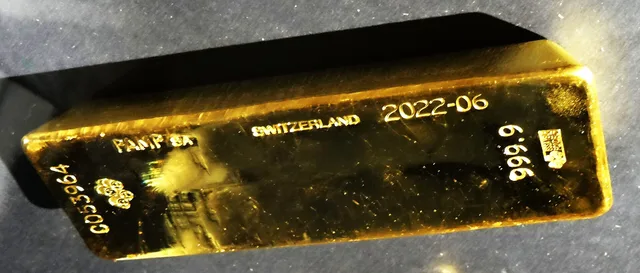
An alloyed coin weighs more than the gold inside it. A bar stamped 999.9 is close to pure, but it still carries a stated gross weight and a calculated fine content. Face value is a third number again.
Gross, fine, and face value
Field
- Gross mass
- total weight
- Fineness
- parts per thousand
- Fine content
- gross x fineness
- Face value
- legal tender
What it is
- Gross mass
- issuer spec, scale
- Fineness
- stamp, assay card
- Fine content
- your calculation
- Face value
- coin issuer only
Source
- Gross mass
- Fineness
- Fine content
- Face value
Use the issuer's specification sheet. Put gross mass, fineness, and fine-gold content in separate columns. Compare measured mass and dimensions with the exact product specification and written order terms; never infer one from the product name. There is no single tolerance that applies to every bullion product, so ask the issuer or seller to state the applicable tolerance in writing rather than assuming a pass/fail margin.
| Field | What it is | Where it comes from |
|---|---|---|
| Gross mass | Total weight of the piece | Issuer spec, your scale |
| Fineness | Parts per thousand of gold | Stamped mark, assay card |
| Fine content | Gross mass x fineness | Your calculation |
| Face value | Legal tender figure, if any | Coin issuer only |
A seller can display a bank-wire price for a large quantity. The buyer selects one unit, pays by card, adds insured shipping, and sends it to a different destination. The delivered total can differ from the headline.
The CFTC has a list of questions to ask before buying physical gold or silver. It tells buyers to ask about these topics:
Ask before buying physical gold
- spot price
- spread
- fees
- financing
- delivery
- storage
- seller's history
Before paying, get written answers to these questions:
- What exact product, gross weight, fineness, serial, and packaging am I buying?
- What is the delivered total for my quantity, payment method, and destination, including every fee?
- Who will hold and insure the metal before delivery, and when does responsibility for it pass to me?
- What are the delivery, return, inspection, and refund terms if the weight, serial, or packaging differs?
- What will you pay to buy the metal back, and what conditions, deductions, or shipping charges apply?
Use these as transaction-specific questions, not as verbatim CFTC wording.
Save the listing. Get a written total for your actual quantity, payment method, and destination. Work the premium from the delivered total, not the headline. Walk away if material charges stay undisclosed.
The assay card is damaged
A cracked, cut, cloudy, or resealed card lowers confidence and lowers a dealer's bid. The metal may still be genuine. The package may also hide a substitution. Damage alone proves neither.
Photograph the parcel before you open it, then photograph the card. Do not glue, polish, or reseal anything. Compare the bar, card, serial, and packaging with the listing and the issuer's product specification. Take measurements you can make safely, and do not assume there is a universal assay-card or package standard. Notify the seller inside the return window and agree in writing on who examines the piece and where it is held.
The serials do not match
The bar, the card, the invoice, and the seller's record can carry four different numbers. A fulfillment error, a record error, or a substitution all produce that result. Guessing which one weakens your position.
Serial mismatch response
- Quarantine the whole order
- Write each number with context
- Send one discrepancy notice
- Ask replacement, return, or inspection
- Watch payment and carrier deadlines
Quarantine the whole order. Write down each number with its context. Send one short discrepancy notice. Ask for replacement, return, or independent inspection under the contract, and watch the payment and carrier deadlines while you wait.
"Good Delivery" is used loosely
A listing says the bar comes from a refiner on the LBMA list, then implies the retail bar is itself London Good Delivery. Those are different claims.
LBMA's explanation of Good Delivery scope describes roughly 400-troy-ounce gold bars for the London wholesale market and states that other refined products from accredited refiners fall outside the Lists' scope. A one-ounce coin or a kilobar can be well made and still not be a London Good Delivery bar.
Details that identify the item:
Good Delivery is used loosely
- maker
- weight
- fineness
- hallmark
- serial
- packaging Ask the seller to put any claimed standard in writing.
Bullion turns into a collectible pitch
You asked for metal exposure. The salesperson redirects you to a proof, a graded coin, a limited issue, or a rare date with a much higher premium. The extra value lives in a different resale market.
Pause the order. Ask for:
- the exact catalog identity;
- the mintage or population claim;
- independent comparable sales;
- the dealer's buyback, grading fees, and delivered premium. If the goal is still bullion, compare the proposed item against a standard bar on fine content and immediate net exit.
Opening the package can remove the remedy
A buyer cuts the assay card open to test the metal, then finds the return policy excluded opened products. The cut can also lower future bids.
Read the return, inspection, and packaging terms before you buy. Check whether opening the card affects returns, who pays return shipping, and how to report a discrepancy. If the evidence conflicts after delivery, contact the seller first and agree in writing on who may open or test the item.
The exit market was assumed
An obscure small bar can be genuine and still draw a weak local bid, because nearby buyers lack the reference equipment or the demand. The premium you paid is not automatically the premium you get back.
Ask for live buyback quotes before you buy. Note whether intact packaging, minimum quantities, shipping, or testing apply. Price the round trip, not just the acquisition.
Incident record
Keep these for any dispute:
- Listing, invoice, price timestamp, and payment proof
- Shipping label, tracking, insurance, and parcel photos
- Product, serial, packaging, weight, and dimension records
- Communications in date order
- Test method, instrument, operator, and raw results
- Contract deadlines and the resolution you requested
Use a scale appropriate for the bar's mass, and record its model, resolution, calibration status, and repeat readings. A scale result alone cannot authenticate metal. In the United States, NIST Handbook 44 provides specifications and tolerances for commercial weighing devices; states and local jurisdictions may adopt and enforce it. It does not establish one universal bullion-bar weight tolerance. If further checking is warranted, an independent bullion professional may use X-ray fluorescence (XRF) to assess surface composition or ultrasonic testing to look for internal anomalies; neither result alone proves the whole bar is genuine.
Common questions
Is a damaged assay card proof of a fake bar?
No. It is a condition and evidence problem. Document it, then verify in proportion to what is at stake.
Can a listed refiner make products outside London Good Delivery?
Yes. Accreditation of the refiner and the status of one particular bar are separate questions. Check the bar, not the brand.
Should I accept store credit after a substituted product arrives?
Only if credit is the remedy you want. Before agreeing, get the proposed remedy and any effect on your other options in writing.
Can cleaning fix a discolored gold product?
Do not clean first. Surface change can carry diagnostic information, and cleaning can strip a finish or weaken a return claim.