Reviews
Part of Platinum and palladium bullion guide to risks
Platinum, palladium, gold, and silver bullion compared
Platinum, palladium, gold, and silver bullion compared by demand, retail depth, product range, bulk, premium, verification, custody, volatility, and exit.
What to take away
- The four metals have different demand drivers, supply concentration, product ranges, and retail buyer networks.
- Gold usually concentrates more value in less space; silver usually creates the greatest bulk for a given dollar amount.
- Platinum and palladium can have fewer retail products and wider or less stable spreads.
- Government coins and private bars must be compared by exact specification, not metal name alone.
- A mixed-metal holding creates more price feeds, test profiles, inventory categories, and exit routes.
This comparison addresses physical bullion operations, not a recommendation or forecast. No metal is a universal inflation hedge, safe haven, or diversification solution. Each can lose value.
Operational comparison
Gold
- Common retail breadth
- Broad
- Value density
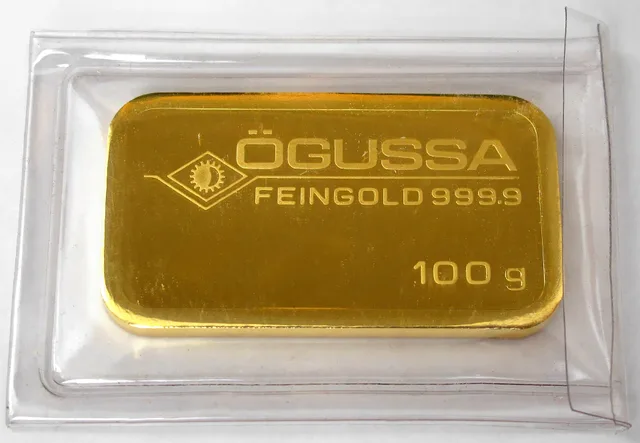
- Usually high
- Industrial influence
- Present
- Common retail units
- Fractions, ounces, grams, bars
- Local bid depth
- Often broad
- Testing need
- Metal-specific
Silver
- Common retail breadth
- Broad
- Value density
- Usually low
- Industrial influence
- Significant
- Common retail units
- Coins, rounds, many bar sizes
- Local bid depth
- Often broad
- Testing need
- Metal-specific
Platinum
- Common retail breadth
- Narrower
- Value density
- High
- Industrial influence
- Significant
- Common retail units
- Mainly one-ounce coins and bars
- Local bid depth
- Must be checked
- Testing need
- Correct platinum profile
Palladium
- Common retail breadth
- Often narrowest
- Value density
- High but price-dependent
- Industrial influence
- Significant
- Common retail units
- Mainly one-ounce coins and bars
- Local bid depth
- Must be checked closely
- Testing need
- Correct palladium profile
These are common patterns, not guarantees. The current market and location control actual availability.
Bullion comparison by dimension
Gold
- Retail breadth
- Broad
- Value density
- High
- Industrial influence
- Present
- Common retail units
- Fractions, ounces, grams
- Local bid depth
- Often broad
- Testing need
- Metal-specific
Silver
- Retail breadth
- Broad
- Value density
- Low
- Industrial influence
- Significant
- Common retail units
- Coins, rounds, bars
- Local bid depth
- Often broad
- Testing need
- Metal-specific
Platinum
- Retail breadth
- Narrower
- Value density
- High
- Industrial influence
- Significant
- Common retail units
- One-ounce coins, bars
- Local bid depth
- Must be checked
- Testing need
- Platinum profile
Palladium
- Retail breadth
- Narrowest
- Value density
- Price-dependent
- Industrial influence
- Significant
- Common retail units
- One-ounce coins, bars
- Local bid depth
- Check closely
- Testing need
- Palladium profile
Demand drivers differ
Gold demand includes jewelry, investment, central-bank activity, technology, and fabrication. Silver combines investment and broad industrial use. Platinum and palladium have strong catalytic and industrial roles, and manufacturers may substitute between them when engineering and regulation permit.
USGS's 2026 Mineral Commodity Summaries reports platinum-group uses in vehicle catalysts, chemical and petroleum processing, electronics, glass, medical and dental equipment, jewelry, investment, and laboratories. The report also documents concentrated production and trade. These facts help identify drivers, but they do not predict price direction.
Retail product choice differs
Gold offers many fractional coins and gram bars. Silver offers numerous one-ounce products and large bars. Platinum and palladium retail catalogs often have fewer years, issuers, and sizes. A buyer may face a higher premium or a limited replacement market even when the benchmark price is active.
Availability must be checked at both ends. A dealer may sell a product only when a distributor releases a small batch, then stop bidding when inventory policy changes. Save current stock and bid evidence rather than treating a past catalog page as proof of continuous retail depth.
The U.S. Mint's 2026 palladium uncirculated coin page specifies a collector product with 99.95 percent palladium, one fine troy ounce, 34.03-millimeter diameter, reeded edge, mint mark, privy mark, capsule, case, and certificate. Those collector attributes must not be transferred to the bullion version or used to justify a premium without collector-market evidence.
Bulk and custody differ
Silver usually requires the most weight and volume for a given dollar amount. Gold, platinum, and palladium concentrate more value in small units, though their relative price order changes. High value density eases physical storage but raises theft exposure per object.
Storage design should use actual gross weight, container dimensions, insurance, and access needs. A safe suited to a few platinum coins may be structurally inadequate for hundreds of silver ounces, while a lost platinum bar can represent a larger share of the holding.
Spreads and liquidity differ
Liquidity is not just a global trading volume. A household owner needs a buyer for the exact physical product, condition, quantity, location, and time. Gold and silver products often have more retail dealers. US channels include APMEX, JM Bullion, and local coin shops, and many publish buyback prices for common gold and silver products.
The US Mint sells new bullion coins through authorized purchasers and does not buy them back. Platinum and palladium may produce fewer firm bids and larger differences between them.
Typical ranges, which move with demand and are not quotes:
| Metal and product | Typical premium over spot | Typical dealer buyback |
|---|---|---|
| Gold, one-ounce coin | 4 to 8 percent | 1 to 3 percent below spot |
| Gold, one-ounce or kilo bar | 1 to 4 percent | 1 to 3 percent below spot |
| Silver, one-ounce coin or round | 12 to 25 percent | 5 to 12 percent below spot |
| Silver, 100-ounce bar | 4 to 10 percent | 3 to 8 percent below spot |
| Platinum, one-ounce coin or bar | 5 to 12 percent | 3 to 8 percent below spot |
| Palladium, one-ounce coin or bar | 6 to 15 percent | 5 to 15 percent below spot |
Compare:
- Premium over spot at purchase and the buyback price at sale.
- Firm bid sizethe quantity a buyer will take at that price.
- Settlement time and payment method.
- Shipping, insurance, and assay costs on both sides.
- Whether the buyer wants the exact year, mint, and packaging.
- Any minimum quantity or product restriction.
Compare before buying or selling
- Delivered premium per fine ounce
- Number of credible two-way dealers
- Net bid and required condition
- Settlement time and payment route
- Shipping, insurance, and testing charges
- Minimum lot and package rules
A benchmark can rise while a product-specific bid falls relative to it.
Verification differs
Weight and dimensions remain useful screening data, but density, conductivity, ultrasound response, and X-ray fluorescence interpretation are metal-specific. Confirm that the examiner has correct reference samples, calibration, geometry range, and experience.
A generic "precious metal verifier" label does not prove capability for every metal and package. Ask for the instrument, mode, limitations, and raw result.
Records multiply with each metal
A mixed holding needs separate metal codes, price references, units, fine-content formulas, and current buyers. Keep product and sale records at lot level. Never allow spreadsheet sorting to merge platinum and palladium because both use 999.5 fineness.
US brokers file Form 1099-B once a bullion sale crosses IRS thresholds, such as $1,000 face value for US Silver Eagles, and gains are taxable whether or not a form is filed.
Choosing by budget, storage, and exit route
Choose only after answering:
- Budgetwhat share of the holding can sit in one metal?
- Storagewhat gross weight and container size can the safe or vault take?
- Exitwhich named buyer takes this product, in this quantity, at this location?
- Verificationwho tests it, with what calibration and reference samples?
- Timingwhen might a sale happen, and does that change the unit size?
Metal selection decision frame
What purpose does this specific metal serve?
Define purpose before comparing products
Stop and clarify the holding objective
Common questions
Is palladium always more expensive than platinum?
No. Relative prices change. Compare dated references and never identify a metal by price alone.
Is silver always the most liquid physical metal?
No. Product, quantity, location, condition, and buyer network control a particular sale.
Can one testing device verify all four metals?
Some instruments support several metals, but capability depends on method, calibration, geometry, packaging, and operator skill.
Does owning four metals guarantee diversification?
No. Prices can move together or separately, and physical costs may offset any intended diversification benefit.