Guides
Pawn Shop Bullion Inspection: How to Test and Price Gold Coins Before You Buy
Pawn shop bullion inspection starts with a state license check, not a price quote. Ask for written tests and spot-price math before you buy gold coins.
What to take away
- A pawn shop inspection separates license checks, coin testing, and price negotiation.
- Ask the seller to test the coin in front of you and record the result.
- Require a written purchase agreement that lists weight, purity, test method, and return window.
- Walk away from any shop that will not name its state license number or spot price source.
U.S. pawn shops sell gold coins at prices below online bullion dealers, but the discount usually reflects risk. A pawnbroker may not be a numismatic expert, and the coin may have been tested quickly or not at all. Before you enter a shop, read the Bullion pricing guide for spot, premium, spread and fees. That page anchors the price math you will need.
Scopes that are actually different jobs
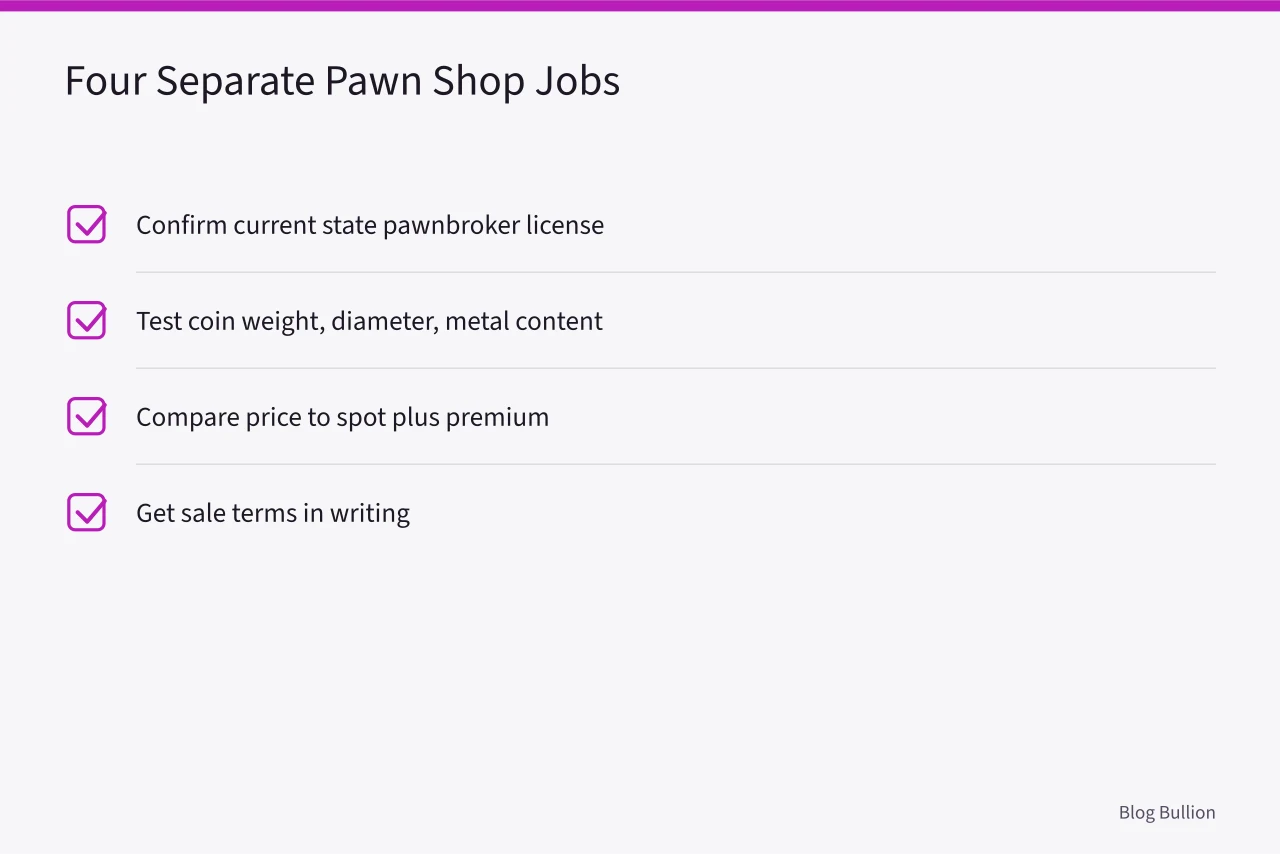
Pawn shop bullion inspection mixes four separate jobs. First, confirm the shop holds a current state pawnbroker license. Second, test the coin for weight, diameter, and metal content. Third, compare the seller's price to current spot plus a realistic pawn premium. Fourth, get the sale terms in writing.
Questions to ask the seller
Ask these questions in the shop, before any money changes hands:
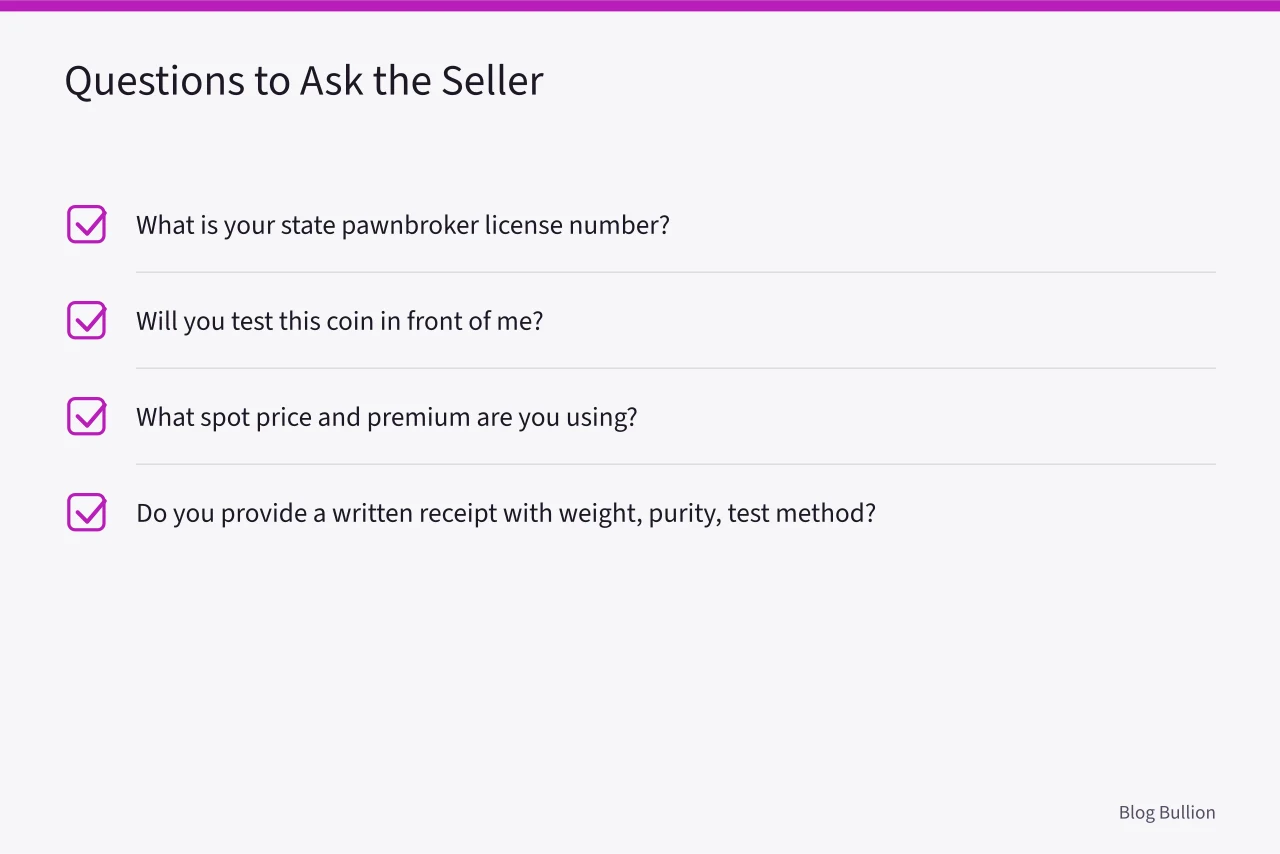
These questions force the seller to separate claims from evidence. A licensed pawnbroker can usually name the state agency that issued the license. A seller who deflects on any question is testing your patience, not the coin.
Evidence to request before paying
Before you pay, ask for evidence you can verify.
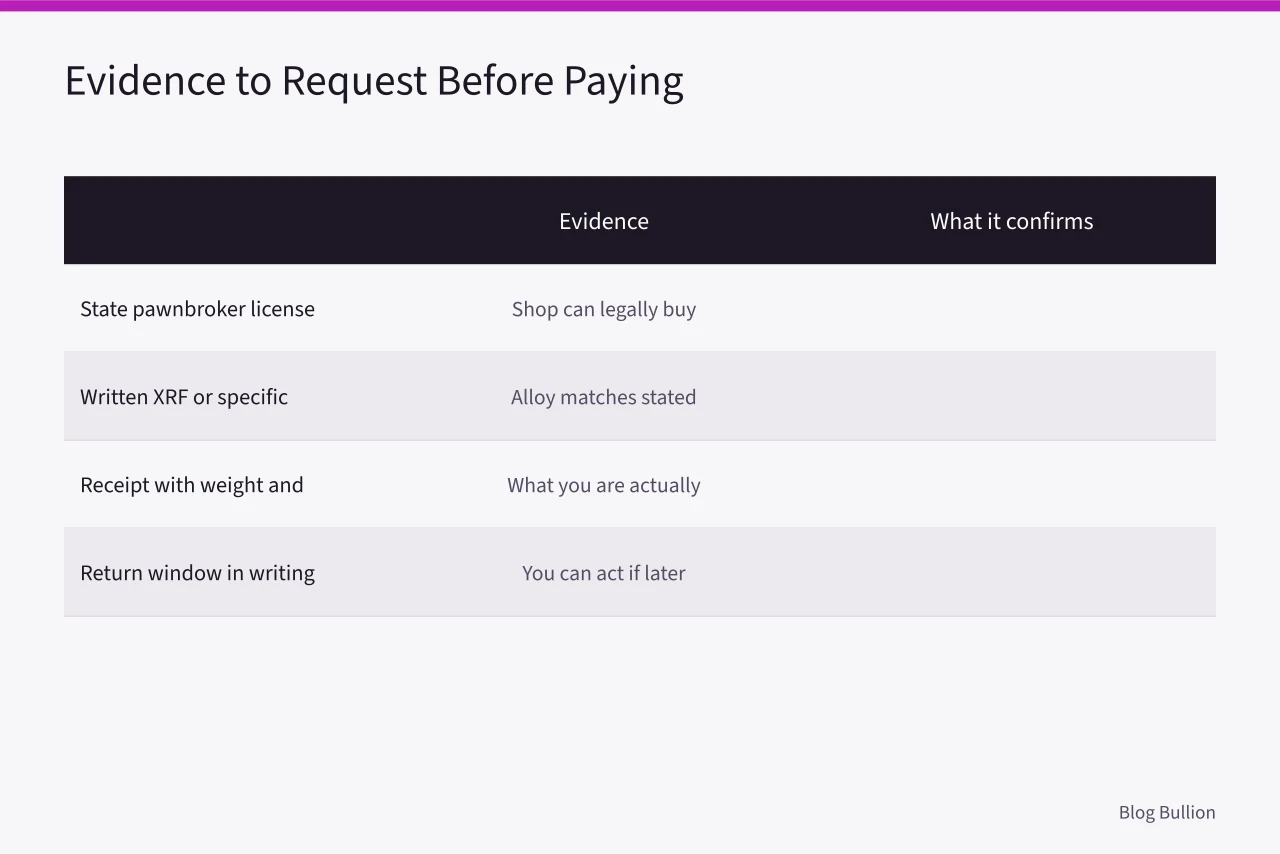
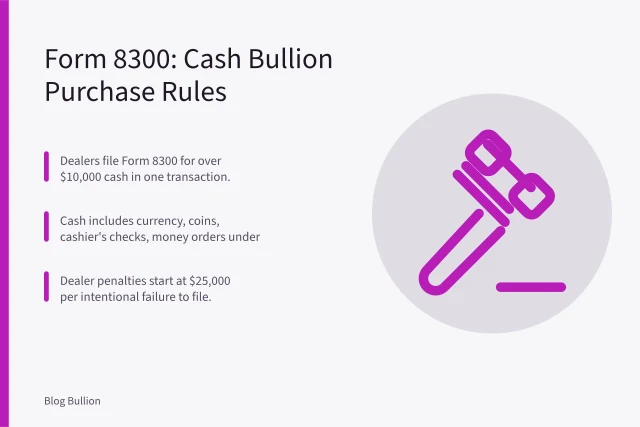
At minimum, a pawn shop should show you the test on the spot. If the shop uses an outside tester, ask for the tester's name and the date. State licensing also matters for taxes and reporting. Check Form 1099-B and 8300 reporting for how pawn shops handle large cash sales before you agree to terms.
Answers that should end the conversation
If you hear any of these answers, leave the shop.
- "We don't know our license number."
- "The coin is real because we say so."
- "We don't test coins before selling."
- "Spot price does not matter in a pawn shop."
A pawn shop that will not commit a test result to paper is not offering you a purchase; it is offering you a story.
Spot price and local negotiation
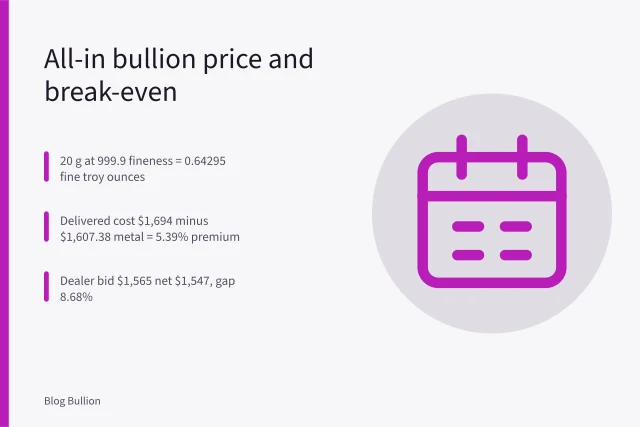
Pawn shops price gold coins from the daily spot price, but they rarely quote it as a line item. Ask for the spot source and the time of the quote. Negotiate from spot, not from the sticker price. The Sales Tax on Bullion page shows how state tax changes your final cost in different places. A typical pawn premium can range from 3 to 10 percent over spot for common bullion coins, but the shop may try to charge more. No single national rule sets that range, so treat it as an illustrative benchmark, not a guarantee. A pawn shop may also bundle a storage or appraisal fee into the quote. Ask for those fees to be itemized so you can see the true coin price. Some pawn shops quote a premium over spot, others a discount from retail. Identify which method the seller uses before you compare prices elsewhere.
What the purchase agreement must state
The written agreement needs to state the coin's country, denomination, weight, purity, test method, test date, and total price. It must name the pawn shop's legal entity and license number. It must state the return window, if any, and whether a refund or exchange is available. A pawn shop may use its own receipt form. Check that the receipt lists the same coin description as the agreement and that the license number appears on both documents. Federal law also touches the sale. A pawn shop must file Form 8300 for cash payments over $10,000; the IRS instructions for Form 8300 explain that obligation. If you later sell the coin at a gain, the IRS expects capital gains reporting under Publication 544. State sales tax on coins varies widely; a Wikipedia overview of U.S. sales taxes shows which states apply tax to bullion purchases.
Common questions
Do pawn shops sell gold coins below online dealers? Often yes, because they buy secondhand coins and price from spot with a lower premium. Check calculate an all-in bullion price before you set a walk-away number. But the discount can hide testing and paperwork risk.
What test works best for a gold coin in a pawn shop? An XRF analyzer is fast and non-destructive, but a specific gravity test can confirm the density without expensive tools. Ask the shop which one it uses.
Should I pay cash for a pawn shop gold coin? Cash is common, but any cash purchase over $10,000 triggers Form 8300 reporting. Keep the receipt and the written test record.
Can I return a pawn shop gold coin if it fails a later test? Only if the written purchase agreement states a return window. Many pawn shops sell as-is, so get that term in writing before you pay.