Guides
Platinum and palladium bullion guide to risks
Platinum and palladium bullion guide to the risks of each metal: supply, products, quotes, U.S. tax and IRA rules, verification, storage and resale.
What to take away
- Platinum and palladium are separate metals with different supply, industrial demand, retail products, and bids.
- A benchmark price is not a guaranteed retail purchase or sale price.
- Product choice is narrower than for gold or silver, so current local exit quotes carry more weight.
- Fine content, year, finish, packaging, and condition must match the exact product specification.
- Wider or unstable spreads can turn an apparently small allocation into an expensive round trip.
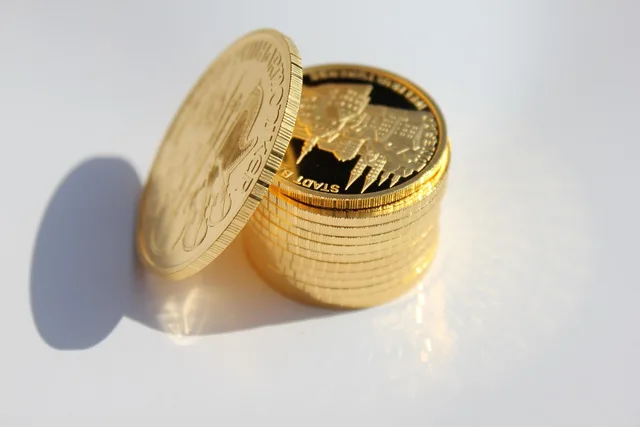
This platinum and palladium bullion guide starts by treating the metals as distinct. Platinum and palladium belong to the platinum-group metals, but they are not interchangeable bullion. Both appear in one-ounce coins and bars, while some dealers offer fractional or larger products. Retail inventory and buyer coverage can be much thinner than for gold or silver.
This guide is educational. It does not recommend either metal, dealer or depository, and it gives no premium levels because they move with every quote. Prices can fall sharply, industrial use can change, and physical ownership creates authentication, storage, and sale duties.
Start with product identity
Retail markings commonly use PT or PLATINUM and PD or PALLADIUM. Many investment products state 999.5 fineness, equal to 99.95 percent, but a buyer must use the issuer's exact specification rather than a category assumption.
Record:
- Metal and chemical symbol
- Product name, mint or refiner, and year
- Coin, minted bar, cast bar, proof, or uncirculated finish
- Gross weight, fineness, and fine content
- Diameter or bar dimensions
- Edge, hallmark, serial, and packaging
- Government guarantee or private assay claim, within its real scope
The U.S. Geological Survey's platinum-group metals statistics page identifies platinum, palladium, iridium, osmium, rhodium, and ruthenium as the group and documents supply, demand, production, and use data. It also describes major catalytic applications. Industrial relevance does not guarantee a rising bullion price.
Understand the demand mix
Platinum and palladium have uses in vehicle emissions systems, chemical and petroleum catalysts, electronics, medical and dental equipment, glass manufacture, jewelry, and other industrial processes. Their price behavior can reflect vehicle technology, substitution between metals, recycling, mine concentration, inventories, economic activity, and investment demand.
The investment case should therefore survive more than one slogan. "Rare" does not mean liquid. "Needed by industry" does not guarantee that demand will exceed supply at the buyer's exit date.
Supply is concentrated in very few places. The USGS platinum-group metals commodity summary records that a single company in Montana mined and processed platinum-group metals domestically in 2025, and that South Africa is the world's leading producer of PGM-containing mined material. Russia leads mined palladium.
The same summary reports that South African production fell in 2025 on declining palladium prices, the cost of deep-level mining, and disruptions to electricity supply. Concentration on that scale is a risk running in both directions, and it is one reason these two metals do not behave like gold.
Platinum and palladium risks side by side
The two metals share a group, not a risk profile. Read the same sources for each metal separately:
- Supply exposure.Platinum depends heavily on South Africa, the leading producer of PGM-containing mined material. Palladium adds Russia, which leads mined palladium, so a palladium holder carries a second country risk on top of South African output.
- Price feedback.South African production fell in 2025 partly on declining palladium prices, so a weak palladium price can itself reduce supply of both metals.
- Demand mix.Both depend on vehicle emissions systems and other catalysts. A shift in vehicle technology or substitution of one metal for the other can move the two prices in opposite directions.
- Retail depth.Stock and buyer coverage can differ between the two metals and between products. Check it with current two-way quotes for each metal rather than assuming one is as liquid as the other.
- Tax and accounts.The IRA exception covered below names platinum coins, while palladium appears only as bullion, so the same account may accept one product and not its counterpart.
Plan for U.S. tax and IRA rules
Tax is a resale risk, not just a cost line. The IRS capital gains topic states that net capital gains from selling collectibles such as coins are taxed at a maximum 28% rate. Keep the purchase invoice and every sale cost so the gain can be calculated, and ask a tax professional whether the rate applies to your product.
Retirement accounts add a second test. IRS Publication 590-B on IRA distributions states that if an IRA invests in collectibles, the amount invested is considered distributed in the year invested. It also states that an IRA can invest in certain platinum coins and certain gold, silver, palladium, and platinum bullion. Confirm with the custodian that the exact product qualifies before money leaves the account.
Recognize common retail forms
Examples include the American Platinum Eagle, the official U.S. platinum bullion coin issued by the U.S. Mint and stated as 99.95% fine, and the Canadian Palladium Maple Leaf from the Royal Canadian Mint. Confirm the exact issue, year, and specification; product details and availability can vary.
Sovereign bullion coins
Government coins provide published specifications and nominal face values. Bullion, proof, reverse-proof, and uncirculated versions can share metal content while trading in different markets. Pay a collector premium only after checking comparable sales and a collector-market bid.
Minted bars
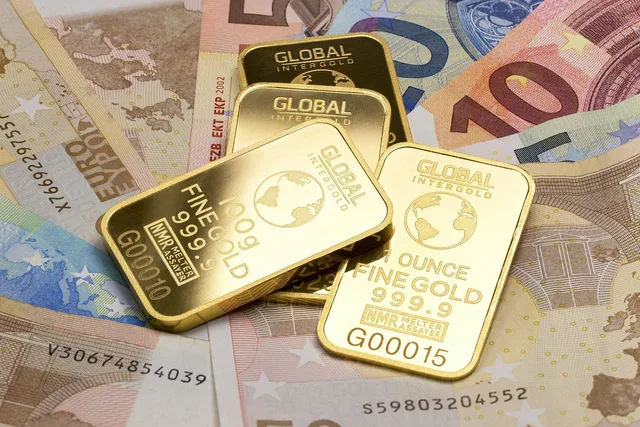
One-ounce minted bars are common retail products. Examples of established bar brands include PAMP Suisse, Valcambi, and Heraeus; verify the exact metal, maker, and specification on the item and invoice. They may sit in serialized assay packaging. Confirm that the number on the bar agrees with the card and invoice. Opening a package can change marketability without resolving every authenticity question.
Larger plates and ingots
Institutional Good Delivery plates and ingots are far larger than typical retail units. For platinum and palladium, the relevant wholesale Good Delivery Lists are maintained by the London Platinum and Palladium Market (LPPM). Retail bars made by an approved refiner do not automatically inherit the status of a wholesale deliverable product.
Compare a complete quote
Record the benchmark source and timestamp, then calculate fine ounces and delivered cost. Include product premium, quantity tier, payment cost, tax, shipping, insurance, and storage. Ask at least two buyers for current net bids on the same product and condition.
Measure / Purpose
- Metal reference
- Fine ounces times benchmark
- Delivered premium
- Total purchase cost minus metal reference
- Immediate net exit
- Bid minus every sale cost
- Round-trip gap
- Delivered cost minus immediate net exit
- Sale depth
- Number of credible buyers and lot limits
A narrow displayed ask does not settle liquidity if no one gives a firm buyback. The most useful evidence is a dated, product-specific two-way quote.
Treat availability as a risk
Limited retail supply can increase premiums during demand spikes. Limited buyer familiarity can also widen discounts when selling. A product may disappear from dealer catalogs for long periods, making replacement value and comparable bids harder to establish.
Before buying, ask whether the dealer normally stocks the item, how often it buys the item, whether it publishes bids, which tests it uses, and whether packaging affects settlement. Call independent buyers as well.
Verify and store
Compare markings, weight, dimensions, edge, design, serial, and package with the exact year and version. Platinum and palladium have different densities, so do not reuse a gold or silver test profile. Electronic and X-ray methods require correct calibration and interpretation.
Store the metal under the same disciplined custody model used for other high-value small objects. Preserve invoice, payment, package, serial, photographs, measurements, tests, insurance, transfer, and sale records. A small physical footprint does not mean low theft exposure.
Common questions
Are platinum and palladium priced together?
No. Each has its own market and price reference, even though both belong to the same metal group.
Is every platinum coin 999.5 fine?
No assumption is safe. Use the exact issuer specification for the exact product and year.
Does industrial demand make these metals safer than gold?
No. Industrial exposure creates its own cyclical, technological, substitution, and supply risks.
Why obtain a buyback before purchase?
It reveals whether a real buyer recognizes the product and what immediate spread and conditions apply.
In this guide
- How to research platinum bullion product detailsLearn to research platinum bullion product details: identify the item, check its specification, compare a benchmark, test resale depth, and plan verification.
- Platinum, palladium, gold, and silver bullion comparedPlatinum, palladium, gold, and silver bullion compared by demand, retail depth, product range, bulk, premium, verification, custody, volatility, and exit.
- Platinum and palladium dealer-quote checklistPlatinum and palladium quote checklist covering metal identity, products, benchmark times, premiums, fees, packaging, testing, bids, delivery, and records.
- Thin markets, wide spreads, and limited-product problemsPlatinum and palladium market problems guide covering missing bids, wide spreads, stale benchmarks, limited products, collector switches, testing gaps, and fixes.
- Palladium liquidity case: a fictional coin, bar and exitsA fictional palladium liquidity case: one coin and one bar, local and mail-in exits compared net, futures terms read correctly, position kept small.