Guides
Safety Deposit Box Bullion in Canada: Bank Rules, Insurance Gaps, and Access Problems
Canada safety deposit box bullion: bank terms, insurance gaps and branch access limits for one chartered-bank box, plus fees and closures affecting your gold.
What to take away
- A Canadian bank safety deposit box does not insure bullion; the bank's rental terms and CDIC do not cover contents.
- The measurable limit is one small box, roughly 10 cm high by 25 cm wide by 60 cm deep, which rules out large bars.
- Access is branch-hours only and restricted to the renter and any registered deputy, so the metal is not instantly sellable.
- The practical compromise is small coins and one-ounce bars, plus separate scheduled insurance.
- Stop the workaround when replacement value passes about CAD 10,000; above that, private depository or vaulted storage becomes the better risk decision.
A Canadian bank safety deposit box is a rental of a metal compartment, not a deposit account. Royal Bank of Canada and Bank of Montreal rent boxes under similar terms in most provinces. The constraint here is one person with one box, sized at most about 10 cm by 25 cm by 60 cm, and no additional budget for a second box or private vault.
Anything that does not fit in that volume is ruled out. The box access rules at Canadian banks also limit when and how the bullion can be reached. The safe deposit box entry notes that the renter generally bears the risk of loss.
What the constraint removes
This limit removes the ability to store a 100 troy ounce silver bar or a 400 ounce gold bar. A standard 100 oz silver bar is about 15 cm long, 8 cm wide and 8 cm high. It will not fit in a 10 cm high box when placed flat. A 400 oz gold bar is also ruled out by both size and weight.
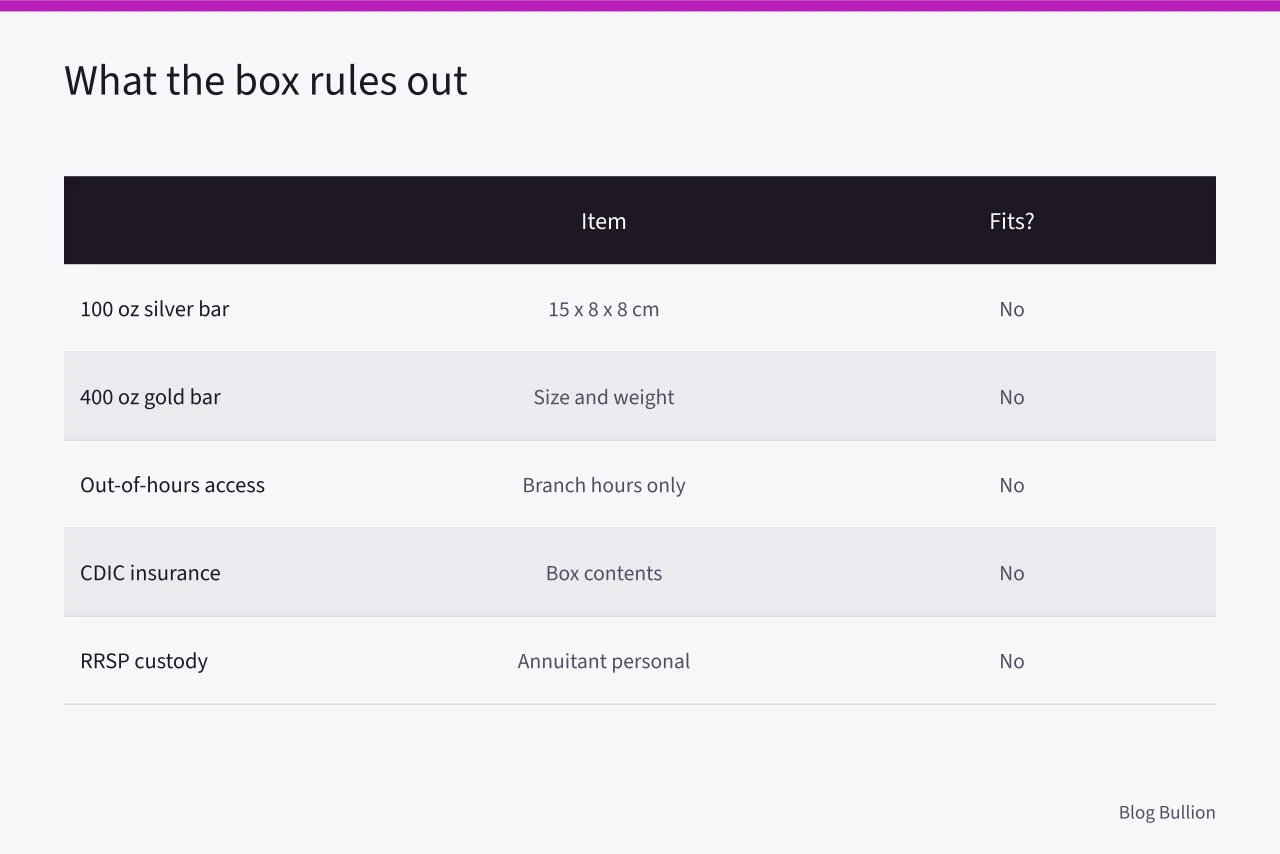
The box removes out-of-hours access. Most branch boxes can only be opened during the branch's posted hours, and you need the bank's guard key and your own key. The bank's rental terms remove any insured protection. CDIC deposit insurance does not cover the contents of a box.
The box also cannot serve as RRSP custody for bullion. Canadian tax rules require plan assets to be held by an issuer or trustee, not by the annuitant personally.
What still works
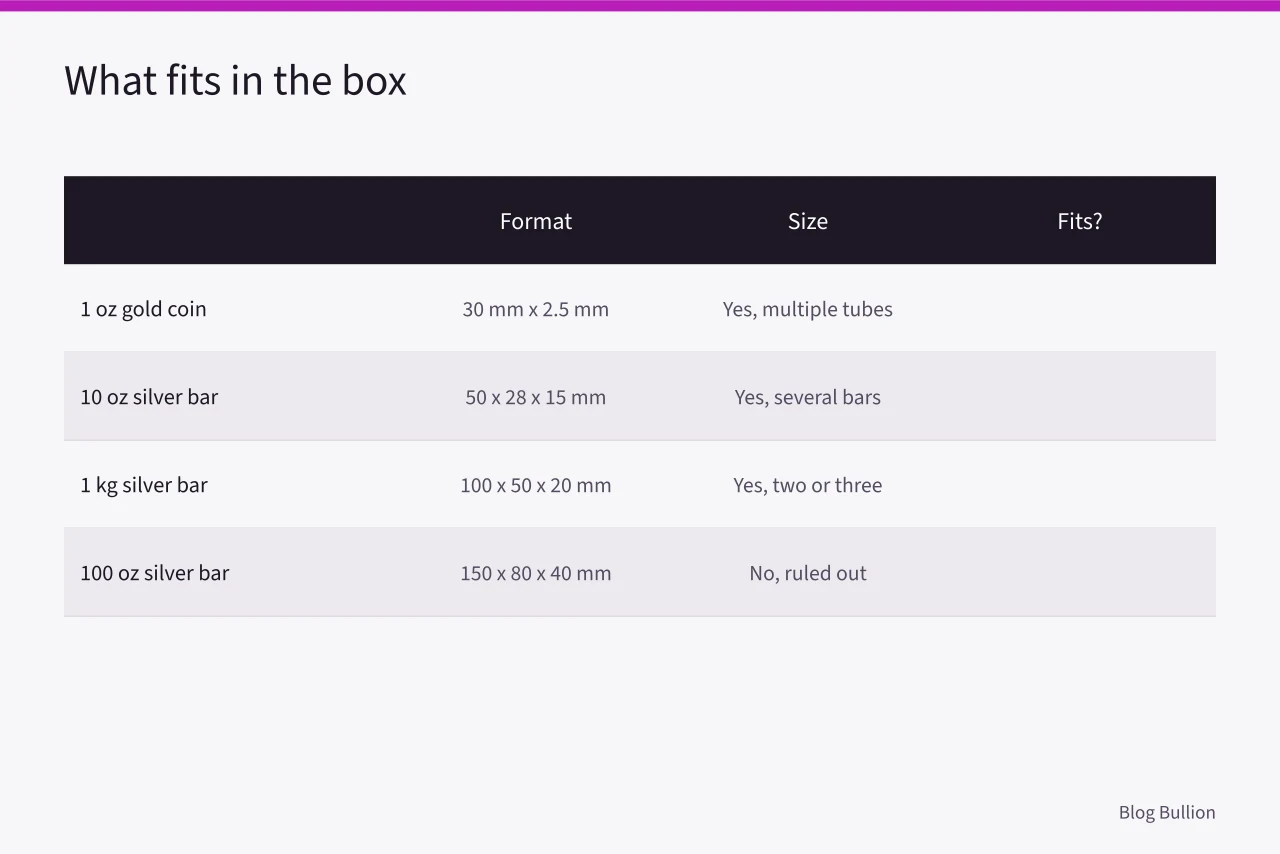
Small-format bullion still works. One-ounce gold coins, ten-ounce silver bars, and tubes of silver maple leafs fit in a small box. A 10 oz Royal Canadian Mint silver bar is roughly 50 mm by 28 mm by 15 mm. You can stack several in one row. Bullion pricing guide helps you calculate the all-in cost for these small pieces. The table below shows which formats fit the constraint.
| Format | Size | Fits in a 10 x 25 x 60 cm box? |
|---|---|---|
| 1 oz gold coin | 30 mm diameter, 2.5 mm thick | Yes, multiple tubes |
| 10 oz silver bar | 50 x 28 x 15 mm | Yes, several bars |
| 1 kg silver bar | 100 x 50 x 20 mm | Yes, two or three |
| 100 oz silver bar | 150 x 80 x 40 mm | No, ruled out |
A registered second keyholder still works. You can add a spouse or adult child to the rental agreement, so one other person can open the box if you are unavailable. This does not add insurance, but it does reduce the single-point failure of one keyholder. An RRSP cannot use this box as trustee custody. Registered Retirement Savings Plan rules require that qualified bullion be held by an approved issuer.
Compromises worth making
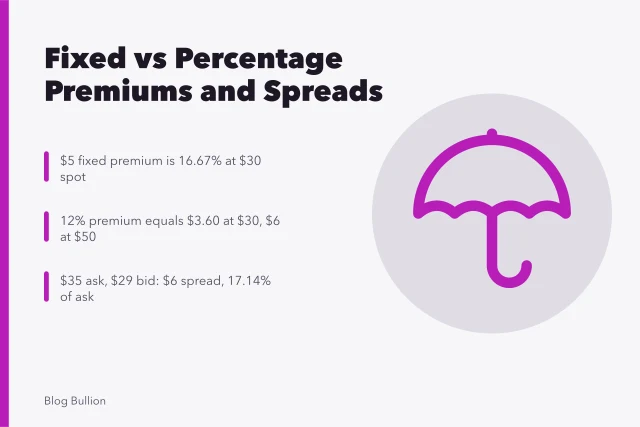
The first compromise is to store only coins and small bars that can be sold in standard lots. Small lots are easier to sell, but they carry wider dealer spreads. Dealer spreads compared shows how a fixed premium and a percentage premium change the net price.
Treat the box as a convenience, not a vault. If the branch is closed and you need the metal, the box is not an available asset.
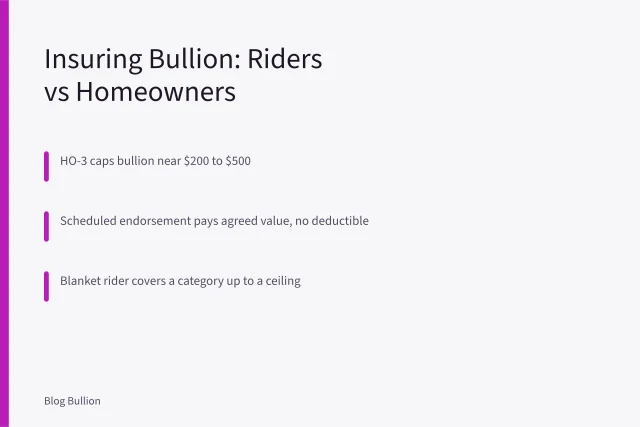
The second compromise is to schedule separate insurance for the coins inside the box. Many Canadian insurers will add a personal articles floater for bullion if you list each item and provide a receipt. The bank does not provide this coverage.
Compromises that are not
Do not keep the only copy of your key in the same branch or in your home safe if the box is your main storage. Do not assume a home insurance rider automatically covers bullion held in a bank box. Many Canadian home policies exclude bullion entirely, and a bank box is not a scheduled item under the property policy by default.
Bringing bullion across the border under cross-border bullion purchases does not solve the insurance gap. Customs and tax rules change the acquisition, not the storage risk. A second bank box without named keyholders also fails, because no one can access it in an emergency.
When to stop and resource it properly
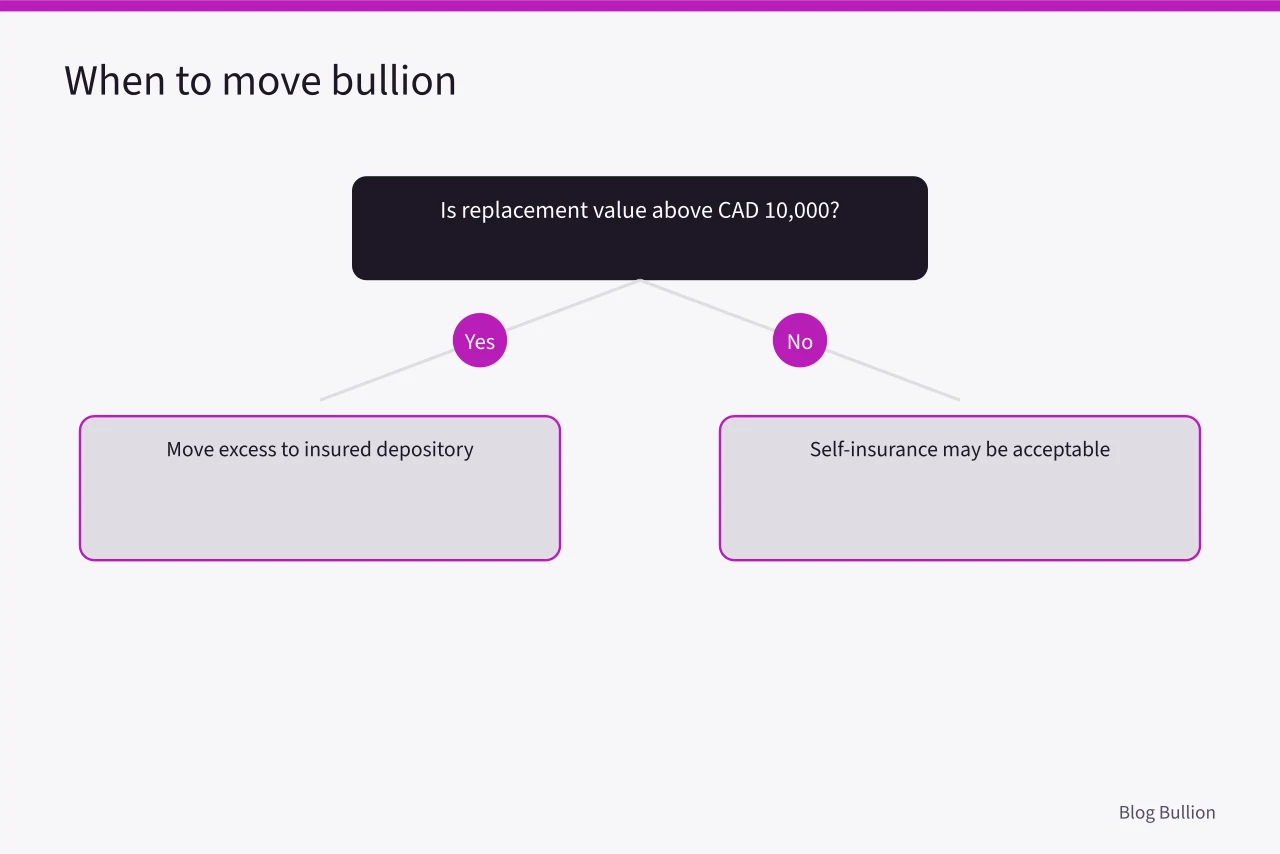
Use a measurable threshold. When the replacement value of the contents reaches CAD 10,000, the absence of scheduled insurance stops being an acceptable self-insurance risk. Below that, a total loss may be painful but absorbable. Above that, move part of the holding to an insured private depository.
Before adding more bullion, do these steps:
- Write down the replacement value of every item in the box.
- Check whether your home or tenant policy covers bullion in a bank box, or whether it excludes it.
- If the value is above CAD 10,000 and no scheduled coverage applies, move the excess to an insured depository.
- Keep a small working amount in the box for short-term sales.
At that point, stop treating the single box as sufficient. Either buy scheduled insurance for the contents or move the higher-value portion to an insured depository. A Guide to Bullion Insurance explains how scheduled personal property coverage works.
Common questions
Does CDIC cover safety deposit box bullion? No. CDIC insures eligible deposits at member institutions. A safety deposit box is a rental, not a deposit.
Can I store a 100 oz silver bar in a small bank box? No. The standard bar is too thick and long for a 10 cm high, 25 cm wide, 60 cm deep box.
Does a home insurance policy cover gold in a bank box? Not automatically. Many policies exclude bullion or require a scheduled personal property endorsement.
When should I stop using the box? When the replacement value passes about CAD 10,000 and the lack of scheduled insurance becomes a serious uncompensated risk.